


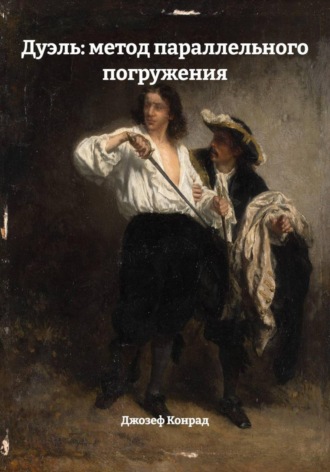
Дуэль: метод параллельного погружения
Lieut. D’Hubert could not remain altogether unmoved by that simple sentiment. (Лейтенант Д’Юбер не мог остаться совсем равнодушным к этому простому чувству; remain unmoved – оставаться равнодушным; sentiment – чувство, эмоциональный порыв) This little fellow was a lunatic, he thought to himself, (Этот малый – безумец, подумал он про себя; little fellow – малый, парень; lunatic – сумасшедший) but there was something in what he said. (но в его словах всё же что-то было; there is something in it – в этом что-то есть) “Of course, I don’t know how far you were justified,” («Разумеется, я не знаю, насколько ты был прав»; how far…justified – насколько оправдан) he began, soothingly. (начал он примиряющим тоном; soothingly – успокаивающе, мягко) “And the general himself may not be exactly informed.” («И сам генерал, возможно, не вполне осведомлён»; exactly informed – точно осведомлённый) “Those people have been deafening him with their lamentations.” («Эти люди оглушили его своими стенаниями»; deafen – оглушать; lamentation – стенание, жалоба)
Lieut. D’Hubert could not remain altogether unmoved by that simple sentiment. This little fellow was a lunatic, he thought to himself, but there was something in what he said.
“Of course, I don’t know how far you were justified,” he began, soothingly. “And the general himself may not be exactly informed. Those people have been deafening him with their lamentations.”
“Ah! the general is not exactly informed,” («Ах! генерал, значит, не совсем осведомлён», – пробормотал лейтенант Феро; not exactly informed – не вполне осведомлён) mumbled Lieut. Feraud, walking faster and faster (пробормотал лейтенант Феро, идя всё быстрее и быстрее; mumble – бормотать; walk faster – идти быстрее) as his choler at the injustice of his fate began to rise. (по мере того как его гнев на несправедливость судьбы начинал закипать; choler – раздражение, гнев; injustice – несправедливость; fate – судьба) “He is not exactly . . . And he orders me under close arrest, («Он, значит, не вполне… А меня он приказывает посадить под строгий арест; order under arrest – приказать арестовать) with God knows what afterwards!” (а потом, кто знает, что ещё будет!; God knows what afterwards – бог знает что дальше)
“Ah! the general is not exactly informed,” mumbled Lieut. Feraud, walking faster and faster as his choler at the injustice of his fate began to rise. “He is not exactly . . . And he orders me under close arrest, with God knows what afterwards!”
“Don’t excite yourself like this,” («Не заводись так», – возразил другой; excite yourself – волноваться, заводиться) remonstrated the other. (возразил другой; remonstrate – возражать, увещевать) “Your adversary’s people are very influential, you know, («Люди твоего противника очень влиятельны, понимаешь; adversary – противник; influential – влиятельный) and it looks bad enough on the face of it. (и само по себе всё это выглядит довольно плохо; on the face of it – на первый взгляд, внешне) The general had to take notice of their complaint at once. (Генерал был вынужден немедленно обратить внимание на их жалобу; take notice of – обратить внимание на; complaint – жалоба) I don’t think he means to be over-severe with you. («Не думаю, что он намерен быть чрезмерно суровым с тобой»; mean to be – намереваться быть; over-severe – слишком строгий) It’s the best thing for you to be kept out of sight for a while.” («Лучше всего для тебя будет немного не показываться на глаза»; keep out of sight – держаться подальше, не показываться; for a while – некоторое время)
“Don’t excite yourself like this,” remonstrated the other. “Your adversary’s people are very influential, you know, and it looks bad enough on the face of it. The general had to take notice of their complaint at once. I don’t think he means to be over-severe with you. It’s the best thing for you to be kept out of sight for a while.”
“I am very much obliged to the general,” («Я весьма обязан генералу», – пробормотал лейтенант Феро сквозь зубы; obliged – признателен, обязан) muttered Lieut. Feraud through his teeth. (пробормотал лейтенант Феро сквозь зубы; mutter – бормотать, ворчать; through his teeth – сквозь зубы) “And perhaps you would say I ought to be grateful to you, too, («И, пожалуй, ты скажешь, что я должен быть благодарен и тебе; ought to be – должен быть; grateful – благодарный) for the trouble you have taken to hunt me up (за хлопоты, которые ты предпринял, чтобы разыскать меня; take the trouble to – потрудиться; hunt up – разыскать, выследить) in the drawing-room of a lady who—” (в гостиной дамы, которая…; drawing-room – гостиная; lady – дама)
“I am very much obliged to the general,” muttered Lieut. Feraud through his teeth. “And perhaps you would say I ought to be grateful to you, too, for the trouble you have taken to hunt me up in the drawing-room of a lady who—”
“Frankly,” interrupted Lieut. D’Hubert, with an innocent laugh, («Откровенно говоря», – перебил лейтенант Д’Юбер с простодушным смехом; frankly – откровенно; innocent laugh – простодушный смех) “I think you ought to be. («Я думаю, ты должен быть благодарен; ought to be – должен быть) I had no end of trouble to find out where you were. (Мне стоило уйму хлопот узнать, где ты находишься; no end of trouble – уйма хлопот; find out – выяснить) It wasn’t exactly the place for you to disport yourself in under the circumstances. (Это было не совсем то место, где тебе следовало развлекаться при таких обстоятельствах; disport oneself – развлекаться, вести себя легкомысленно; under the circumstances – при данных обстоятельствах) If the general had caught you there making eyes at the goddess of the temple . . . oh, my word! . . . (Если бы генерал застал тебя там, строящего глазки богине этого храма… о, боже мой!…; make eyes at – строить глазки; goddess of the temple – богиня храма, метафора о хозяйке салона; oh, my word! – вот уж право!) He hates to be bothered with complaints against his officers, you know. (Он терпеть не может, когда его донимают жалобами на своих офицеров, знаешь ли; hate to be bothered – ненавидеть, когда донимают; complaint – жалоба) And it looked uncommonly like sheer bravado.” (А выглядело это чертовски похоже на простое хвастовство; uncommonly – необычайно, чертовски; sheer bravado – чистое бахвальство)
“Frankly,” interrupted Lieut. D’Hubert, with an innocent laugh, “I think you ought to be. I had no end of trouble to find out where you were. It wasn’t exactly the place for you to disport yourself in under the circumstances. If the general had caught you there making eyes at the goddess of the temple . . . oh, my word! . . . He hates to be bothered with complaints against his officers, you know. And it looked uncommonly like sheer bravado.”
The two officers had arrived now at the street door (Два офицера подошли теперь к входной двери; arrive at – подойти к, прибыть к) of Lieut. Feraud’s lodgings. (к квартире лейтенанта Феро; lodgings – жильё, квартира) The latter turned towards his companion. (Последний повернулся к своему спутнику; the latter – последний из двух; turn towards – повернуться к) “Lieut. D’Hubert,” he said, («Лейтенант Д’Юбер, – сказал он; he said – сказал он) “I have something to say to you, («Мне нужно тебе кое-что сказать; have something to say – нужно что-то сказать) which can’t be said very well in the street. (что не очень-то удобно говорить на улице; can’t be said very well – нельзя сказать как следует; in the street – на улице) You can’t refuse to come up.” («Ты не можешь отказаться подняться»; refuse to come up – отказаться подняться, войти наверх)
The two officers had arrived now at the street door of Lieut. Feraud’s lodgings. The latter turned towards his companion. “Lieut. D’Hubert,” he said, “I have something to say to you, which can’t be said very well in the street. You can’t refuse to come up.”
The pretty maid had opened the door. (Милая служанка открыла дверь; maid – служанка) Lieut. Feraud brushed past her brusquely, (Лейтенант Феро грубо прошёл мимо неё, задев плечом; brush past – пройти мимо, слегка задев; brusquely – резко, грубо) and she raised her scared and questioning eyes to Lieut. D’Hubert, (и она подняла на лейтенанта Д’Юбера испуганные и вопрошающие глаза; scared – испуганный; questioning eyes – вопрошающий взгляд) who could do nothing but shrug his shoulders slightly (который ничего не мог сделать, кроме как слегка пожать плечами; shrug one’s shoulders – пожать плечами; slightly – слегка) as he followed with marked reluctance. (следуя за ним с заметным нежеланием; marked reluctance – явное нежелание, неохота)
The pretty maid had opened the door. Lieut. Feraud brushed past her brusquely, and she raised her scared and questioning eyes to Lieut. D’Hubert, who could do nothing but shrug his shoulders slightly as he followed with marked reluctance.
In his room Lieut. Feraud unhooked the clasp, (В своей комнате лейтенант Феро расстегнул застёжку; unhook – расстегнуть; clasp – застёжка, пряжка) flung his new dolman on the bed, (швырнул свой новый доломан на кровать; fling – бросить; dolman – доломан, гусарский мундир) and, folding his arms across his chest, (и, скрестив руки на груди; fold one’s arms – скрестить руки) turned to the other hussar. (повернулся к другому гусару; turn to – повернуться к)
“Do you imagine I am a man to submit tamely to injustice?” («Ты думаешь, я человек, который смиренно подчинится несправедливости?»; submit tamely – покорно подчиниться; injustice – несправедливость) he inquired, in a boisterous voice. (спросил он громким, взволнованным голосом; inquire – спросить; boisterous – шумный, бурный)
“Oh, do be reasonable!” («Да будь же благоразумен!»; be reasonable – будь благоразумен) remonstrated Lieut. D’Hubert. (возразил лейтенант Д’Юбер; remonstrate – возражать, увещевать)
In his room Lieut. Feraud unhooked the clasp, flung his new dolman on the bed, and, folding his arms across his chest, turned to the other hussar.
“Do you imagine I am a man to submit tamely to injustice?” he inquired, in a boisterous voice.
“Oh, do be reasonable!” remonstrated Lieut. D’Hubert.
“I am reasonable! I am perfectly reasonable!” («Я благоразумен! Я совершенно благоразумен!»; perfectly reasonable – вполне благоразумен) retorted the other with ominous restraint. (возразил другой с зловещим самообладанием; retort – резко ответить; ominous – зловещий; restraint – сдержанность) “I can’t call the general to account for his behaviour, («Я не могу призвать генерала к ответу за его поведение; call to account – призвать к ответу; behaviour – поведение) but you are going to answer me for yours.” (но ты ответишь мне за своё; answer for – отвечать за что-то)
“I can’t listen to this nonsense,” («Я не могу слушать этот вздор», – пробормотал лейтенант Д’Юбер; nonsense – чепуха, вздор) murmured Lieut. D’Hubert, making a slightly contemptuous grimace. (пробормотал лейтенант Д’Юбер, сделав слегка презрительную гримасу; murmur – пробормотать; contemptuous grimace – презрительная гримаса)
“I am reasonable! I am perfectly reasonable!” retorted the other with ominous restraint. “I can’t call the general to account for his behaviour, but you are going to answer me for yours.”
“I can’t listen to this nonsense,” murmured Lieut. D’Hubert, making a slightly contemptuous grimace.
“You call this nonsense?” («Ты называешь это вздором?»; call nonsense – считать чепухой) “It seems to me a perfectly plain statement.” («А мне это кажется вполне ясным заявлением»; plain statement – простое, ясное высказывание) “Unless you don’t understand French.” («Разве что ты не понимаешь по-французски»; unless – если только не)
“What on earth do you mean?” («Что, чёрт побери, ты имеешь в виду?»; what on earth – какого чёрта; mean – иметь в виду)
“I mean,” screamed suddenly Lieut. Feraud, («Я имею в виду, – внезапно закричал лейтенант Феро; scream – кричать; suddenly – внезапно) “to cut off your ears to teach you to disturb me with the general’s orders when I am talking to a lady!” («отрезать тебе уши, чтобы ты научился не мешать мне приказами генерала, когда я разговариваю с дамой!»; cut off – отрезать; teach you to – проучить, научить; disturb – мешать; talk to a lady – разговаривать с дамой)
“You call this nonsense? It seems to me a perfectly plain statement. Unless you don’t understand French.”
“What on earth do you mean?”
“I mean,” screamed suddenly Lieut. Feraud, “to cut off your ears to teach you to disturb me with the general’s orders when I am talking to a lady!”
A profound silence followed this mad declaration; (Воцарилась глубокая тишина после этого безумного заявления; profound – глубокий; silence – тишина; declaration – заявление) and through the open window Lieut. D’Hubert heard the little birds singing sanely in the garden. (и через открытое окно лейтенант Д’Юбер слышал, как в саду трезво поют маленькие птички; open window – открытое окно; little birds – маленькие птички; sanely – здраво, спокойно) He said, preserving his calm, (Он сказал, сохраняя спокойствие; preserve – сохранять; calm – спокойствие) “Why! If you take that tone, of course I shall hold myself at your disposition («Что ж! Если ты берёшь такой тон, конечно, я буду в твоём распоряжении; take that tone – брать такой тон; hold myself at your disposition – быть в распоряжении) whenever you are at liberty to attend to this affair; (когда бы ты ни был свободен, чтобы заняться этим делом; whenever – когда бы ни; at liberty – свободен; attend to – заняться, уделить внимание; affair – дело) but I don’t think you will cut my ears off.” (но я не думаю, что ты отрежешь мне уши»; cut off – отрезать; ears off – уши).
A profound silence followed this mad declaration; and through the open window Lieut. D’Hubert heard the little birds singing sanely in the garden. He said, preserving his calm, “Why! If you take that tone, of course I shall hold myself at your disposition whenever you are at liberty to attend to this affair; but I don’t think you will cut my ears off.”
“I am going to attend to it at once,” («Я займусь этим немедленно», – заявил лейтенант Феро; attend to it – заняться этим; at once – сразу, немедленно) declared Lieut. Feraud, with extreme truculence. (заявил лейтенант Феро с крайней свирепостью; declare – заявить; truculence – свирепость, агрессивность) “If you are thinking of displaying your airs and graces to-night in Madame de Lionne’s salon («Если ты собираешься сегодня вечером щеголять своими манерами и изяществом в салоне мадам де Лион; display airs and graces – щеголять, важничать; salon – гостиная, салон) you are very much mistaken.” («то ты сильно ошибаешься»; be very much mistaken – сильно ошибаться)
“I am going to attend to it at once,” declared Lieut. Feraud, with extreme truculence. “If you are thinking of displaying your airs and graces to-night in Madame de Lionne’s salon you are very much mistaken.”
“Really!” said Lieut. D’Hubert, who was beginning to feel irritated, («Право же!» – сказал лейтенант Д’Юбер, который начинал раздражаться; irritated – раздражённый) “you are an impracticable sort of fellow. («Ты – совершенно невыносимый тип; impracticable – несговорчивый, упрямый; sort of fellow – тип, парень) The general’s orders to me were to put you under arrest, not to carve you into small pieces. (Приказ генерала был посадить тебя под арест, а не изрубить на мелкие кусочки; put under arrest – посадить под арест; carve into small pieces – изрубить на куски) Good-morning!” (Всего доброго!) And turning his back on the little Gascon, (И, повернувшись спиной к маленькому гасконцу; turn one’s back on – повернуться спиной к; Gascon – уроженец Гаскони, горячий южанин) who, always sober in his potations, (который, всегда трезвый в своих возлияниях; sober – трезвый; potation – возлияние, питьё) was as though born intoxicated with the sunshine of his vine-ripening country, (словно родился пьяным от солнечного сияния своей виноградной земли; intoxicated with – опьянённый; vine-ripening country – земля, где зреет виноград) the Northman, who could drink hard on occasion, (северянин, который при случае мог пить крепко; drink hard – пить много, сильно) but was born sober under the watery skies of Picardy, (но родился трезвым под дождливыми небесами Пикардии; watery skies – пасмурное, дождливое небо) made for the door. (направился к двери; make for – направляться к) Hearing, however, the unmistakable sound behind his back of a sword drawn from the scabbard, (услышав, однако, за спиной несомненный звук вынимаемой из ножен сабли; unmistakable sound – характерный, безошибочный звук; draw from the scabbard – вынуть из ножен) he had no option but to stop. (ему не оставалось ничего другого, как остановиться; have no option but to – не иметь иного выбора, кроме как)
“Really!” said Lieut. D’Hubert, who was beginning to feel irritated, “you are an impracticable sort of fellow. The general’s orders to me were to put you under arrest, not to carve you into small pieces. Good-morning!” And turning his back on the little Gascon, who, always sober in his potations, was as though born intoxicated with the sunshine of his vine-ripening country, the Northman, who could drink hard on occasion, but was born sober under the watery skies of Picardy, made for the door. Hearing, however, the unmistakable sound behind his back of a sword drawn from the scabbard, he had no option but to stop.
“Devil take this mad Southerner!” he thought, («Чёрт бы побрал этого безумного южанина!» – подумал он; devil take – чёрт побери; Southerner – южанин) spinning round and surveying with composure the warlike posture of Lieut. Feraud, (резко обернувшись и спокойно оглядев боевую стойку лейтенанта Феро; spin round – обернуться; survey with composure – спокойно осмотреть; warlike posture – воинственная поза) with a bare sword in his hand. (с обнажённой саблей в руке; bare sword – обнажённый меч, сабля)
“At once!—at once!” stuttered Feraud, beside himself. («Сейчас же! – сейчас же!» – заикался Феро, вне себя от ярости; stutter – заикаться; beside himself – вне себя)
“You had my answer,” said the other, keeping his temper very well. («Ты уже получил мой ответ», – сказал другой, весьма сдержанно; keep one’s temper – сохранять спокойствие, не выходить из себя)
“Devil take this mad Southerner!” he thought, spinning round and surveying with composure the warlike posture of Lieut. Feraud, with a bare sword in his hand.
“At once!—at once!” stuttered Feraud, beside himself.
“You had my answer,” said the other, keeping his temper very well.
At first he had been only vexed, and somewhat amused; (Сначала он был лишь раздосадован и даже немного забавлялся; vexed – раздражённый; amused – развеселённый, забавлявшийся) but now his face got clouded. (но теперь его лицо омрачилось; get clouded – омрачиться, потемнеть) He was asking himself seriously how he could manage to get away. (Он серьёзно спрашивал себя, как ему удастся выбраться; manage to get away – суметь уйти, выбраться) It was impossible to run from a man with a sword, (Было невозможно убежать от человека с саблей; run from – убежать от) and as to fighting him, it seemed completely out of the question. (а что до поединка с ним – об этом не могло быть и речи; out of the question – исключено, невозможно) He waited awhile, (Он немного помедлил; awhile – некоторое время) then said exactly what was in his heart. (затем сказал ровно то, что было у него на сердце; exactly – именно; what was in his heart – что у него было на душе)
At first he had been only vexed, and somewhat amused; but now his face got clouded. He was asking himself seriously how he could manage to get away. It was impossible to run from a man with a sword, and as to fighting him, it seemed completely out of the question. He waited awhile, then said exactly what was in his heart.
“Drop this! I won’t fight with you. I won’t be made ridiculous.” («Оставь это! Я не буду с тобой драться. Я не позволю сделать из себя посмешище»; drop this – прекрати это; be made ridiculous – стать посмешищем)
“Ah, you won’t?” hissed the Gascon. («Ах, не будешь?» – прошипел гасконец; hiss – прошипеть) “I suppose you prefer to be made infamous. («Полагаю, ты предпочитаешь стать позорным»; infamous – позорный, бесчестный) Do you hear what I say? . . . Infamous! Infamous! Infamous!” («Ты слышишь, что я сказал?… Позорный! Позорный! Позорный!»; hear what I say – слышишь, что я говорю) he shrieked, rising and falling on his toes and getting very red in the face. (завизжал он, подпрыгивая на носках и краснея лицом; shriek – визжать; rise and fall on one’s toes – подпрыгивать на носках; get red in the face – покраснеть)
“Drop this! I won’t fight with you. I won’t be made ridiculous.”
“Ah, you won’t?” hissed the Gascon. “I suppose you prefer to be made infamous. Do you hear what I say? . . . Infamous! Infamous! Infamous!” he shrieked, rising and falling on his toes and getting very red in the face.
Lieut. D’Hubert, on the contrary, became very pale (Лейтенант Д’Юбер, напротив, сильно побледнел; on the contrary – напротив; pale – бледный) at the sound of the unsavoury word for a moment, (на мгновение – услышав это непристойное слово; unsavoury word – непристойное, обидное слово; for a moment – на мгновение) then flushed pink to the roots of his fair hair. (затем покраснел до корней своих светлых волос; flush pink – покраснеть; to the roots of one’s hair – до корней волос; fair hair – светлые волосы) “But you can’t go out to fight; («Но ты не можешь выйти драться; go out to fight – выйти на поединок) you are under arrest, you lunatic!” (ты ведь под арестом, сумасшедший!»; under arrest – под арестом; lunatic – безумец) he objected, with angry scorn. (возразил он с сердитым презрением; object – возразить; angry scorn – сердитое презрение)