


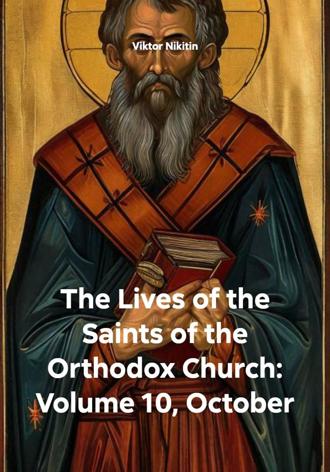
The Lives of the Saints of the Orthodox Church: Volume 10, October
New-Martyr George of Philadelphia in Asia Minor (Mount Athos) (18th century):
New-Martyr George lived during a time when Christians in Asia Minor faced persecution under Ottoman rule. Renowned for his piety and steadfast confession, he endured torture rather than renounce his faith. Following his martyrdom, his relics were venerated, and miracles were reported at his shrine on Mount Athos, where his memory remains a beacon of courage and faithfulness to Christ under oppression.
Saint Damaris of Athens (1st century):
Saint Damaris is mentioned in the Acts of the Apostles as one of the few Athenians who embraced the preaching of the Apostle Paul. Enlightened by the Word of God during his sermon at the Areopagus, she became a fervent Christian and model of early Greek piety. Tradition holds that she lived a life of virginity and prayer, inspiring others by her example and commitment to Christ in a pagan city.
Saint Theophilus the Confessor (8th century):
Saint Theophilus suffered greatly for his unwavering opposition to the iconoclast heresy that threatened the Church in the 8th century. As a confessor, he endured imprisonment, torture, and exile for defending the veneration of holy icons, affirming the true faith handed down from the apostles. His steadfastness helped pave the way for the eventual restoration of icons, and his writings and example encouraged generations to remain faithful during times of doctrinal turmoil.
Greatmartyr Theodore Gavras of Atran in Chaldea (4th century):
Greatmartyr Theodore Gavras was a noble and valiant defender of the Christian faith in Chaldea (modern-day Iraq). Known for his military skill and piety, he openly confessed Christ even when threatened by pagan rulers. Captured and subjected to cruel tortures, he remained unshaken and was eventually martyred. His courage inspired many believers to hold fast to their faith amid persecution and remains a powerful testimony to the strength of Christian witness in hostile lands.
Martyrs Eleutherios and Roustikos of Athens (2nd century):
Saints Eleutherios and Roustikos were early Christians in Athens who suffered for their faith during the reign of Emperor Hadrian. Known for their humility and zeal, they openly confessed Christ before pagan authorities. Subjected to severe tortures, they refused to offer sacrifices to idols, enduring martyrdom with joy and fortitude. Their memory encourages believers to embrace suffering for Christ with courage and hope.
Hieromartyr Leger, Bishop of Autun (7th century):
Saint Leger was a zealous bishop and defender of Orthodoxy during turbulent times in France. Renowned for his courage in confronting corrupt rulers and his care for the poor and orphans, he was eventually betrayed by political enemies and subjected to cruel torture and exile. Refusing to renounce his faith or his pastoral mission, he was martyred, becoming a shining example of episcopal courage and pastoral fidelity.
Righteous Admiral Theodore Ushakov of the Russian Naval Fleet (1745–1817):
Admiral Theodore Ushakov was a fearless and pious commander of the Russian Navy, known for his unyielding faith and humane treatment of enemies. Throughout numerous battles, he displayed not only strategic brilliance but also deep humility and reliance on God. He was renowned for his prayerfulness, fasting, and care for sailors’ souls. After his repose, miracles were attributed to his intercession, and he was glorified as a saint and protector of the Russian fleet, a model of Christian virtue in military life.
Repose of Schema-Hieromonk Theodosius of Karoulia, Mount Athos (20th century):
Schema-Hieromonk Theodosius lived as a recluse on Mount Athos, known for his profound asceticism and prayerful silence. His life was hidden from the world but radiant in holiness. He practiced severe fasting and vigil, interceding ceaselessly for the Church and the world. Those who encountered him spoke of his gentle wisdom and deep peace. At his repose, many testified to his sanctity and the power of his prayers from the wilderness of Karoulia.
* * *
Lives of the Saints Celebrated on October 3
Hieromartyr Dionysius (Dennys) the Areopagite, First Bishop of Athens, and with Him Martyrs Presbyter Rusticus and Deacon Eleutherius (1st century):
Hieromartyr Dionysius the Areopagite was a noble Athenian who heard the Apostle Paul preach on the Areopagus, where Paul proclaimed the resurrection of Christ and the true God to the pagan philosophers and citizens of Athens. Moved by the message and the Spirit, Dionysius embraced the Christian faith, becoming one of the earliest converts in a city renowned for its intellectual pride and idol worship. His conversion marked a pivotal moment for the spread of Christianity in Greece. Recognized for his wisdom and zeal, Dionysius was appointed as the first bishop of Athens, tasked with planting and nurturing the Church in a challenging environment dominated by pagan temples and philosophical debates. He labored tirelessly, facing opposition from the city’s authorities and pagan cults who saw Christianity as a threat to their traditions. Despite these challenges, Dionysius’ eloquence and spiritual insight won many to the faith, and he established a community grounded in apostolic teaching and sacramental life. His pastoral care was marked by humility, love, and boldness in proclaiming the Gospel truth. With him, Presbyter Rusticus and Deacon Eleutherius faithfully assisted in the ministry, exemplifying obedience and courage. Eventually, during a wave of persecution under Emperor Domitian or Nero, Dionysius and his companions were arrested and condemned for their faith. Enduring torture and imprisonment, they remained steadfast and unyielding, inspiring others by their example. Martyred for Christ, they are remembered as shining lights who laid the foundation for the Church in Athens. Tradition holds that Dionysius’ relics performed miracles, and his spiritual legacy influenced generations of believers, including the medieval mystical writings attributed to Pseudo-Dionysius the Areopagite, though the latter’s authorship is debated. Dionysius stands as a model bishop whose life combined intellectual engagement with profound holiness.
Saint John the Chozebite, Bishop of Caesaria in Palestine (6th century):
Saint John the Chozebite was a monk renowned for his asceticism and holiness, dwelling in the desert monastery of Chozeba, located near the Jordan River. From a young age, John was drawn to the monastic life, embracing rigorous fasting, unceasing prayer, and profound humility. His deep love for solitude and contemplation shaped his spiritual journey, making him an exemplar of desert monasticism. Despite his preference for the solitary life, John was called to serve as bishop of Caesaria in Palestine, a position requiring pastoral oversight amid political and religious turmoil. Balancing his ascetic ideals with episcopal duties, he maintained a strict spiritual discipline, often retreating into prayer and silence even while managing the needs of his flock. He was known for his compassion, wisdom, and the ability to calm disputes among clergy and laity. Miracles were attributed to Saint John, including healings and protection of the faithful from invasions and plagues. He wrote letters and sermons encouraging the faithful to persevere in prayer and humility. His example strengthened monastic communities in Palestine and helped preserve Christian witness during a period of doctrinal controversies and external threats. Saint John’s life illustrates the harmony possible between contemplative withdrawal and active ecclesiastical leadership, offering a model for bishops and monks alike.
Blessed Hesychius the Silent (5th century):
Blessed Hesychius was a monk whose defining characteristic was his vow of silence, chosen as a profound spiritual discipline to guard the heart against distraction and sin. He lived in a monastic community where silence was treasured, but Hesychius took it further, speaking only when absolutely necessary and then only with great wisdom and brevity. His stillness was a source of spiritual insight, as it allowed him to listen attentively to the voice of God within. Though his words were few, they carried great spiritual authority. Pilgrims and fellow monks sought his counsel, finding in his silence a reflection of divine peace and clarity. Hesychius taught that silence is not mere absence of speech but a powerful means of interior purification, allowing the soul to grow in communion with God. His life was marked by fasting, prayer, and humble service to others. He endured temptations and spiritual warfare with perseverance, relying on the power of silent prayer and meditation on the Scriptures. Through his example, many monks learned the value of interior stillness in a noisy world. Hesychius’s legacy continues to inspire those seeking deeper union with God through silence, reminding the faithful that sometimes the greatest testimony is in quiet endurance and love.
Saint Dionysius, Recluse of the Kiev Caves (13th century):
Saint Dionysius was a recluse monk of the Kiev Pechersk Lavra, one of the most renowned monastic centers in Rus’. Choosing a life of solitude within the cave cells, Dionysius embraced strict asceticism, fasting, prayer, and vigil, dedicating himself entirely to communion with God. Despite his withdrawal from the world, he remained deeply connected to the life of the monastery through intercession and spiritual counsel. Blessed with gifts of healing and prophecy, Saint Dionysius helped many monks and laypeople through his prayers and blessings. He was known for his gentle spirit, humility, and unwavering faith amid the political upheavals and Mongol invasions of his time. His example of total renunciation of worldly concerns inspired many to repentance and holiness. Dionysius’s life also exemplified the transformative power of grace in the solitary life, as he bore witness that true freedom and joy are found in union with Christ. Upon his repose, miracles were reported at his grave, further confirming his sanctity. His memory is honored as a beacon of monastic perseverance and spiritual wisdom in the Russian Orthodox Church.
New-Martyr Agathangel, Metropolitan of Yaroslav (18th century):
New-Martyr Agathangel served as Metropolitan of Yaroslav during a turbulent period marked by external threats to Christian lands and internal struggles within the Church. A devoted shepherd, he sought to strengthen the faith of his people through pastoral care, preaching, and the administration of the sacraments.
His episcopacy coincided with oppressive measures against Christians by Ottoman and Tatar rulers, who sought to suppress the Orthodox faith. Agathangel courageously refused to abandon his flock or compromise his faith, boldly confessing Christ despite the risk to his life. Arrested and subjected to harsh imprisonment, he endured physical suffering and threats with steadfastness. Ultimately, he was martyred for refusing to renounce Christianity. His death became a rallying point for Orthodox believers, who saw in him a living example of Christ’s words to “take up your cross and follow Me.” New-Martyr Agathangel’s feast day is celebrated with great reverence, honoring his witness of pastoral courage and holy sacrifice.
Martyr Theoctistus:
Martyr Theoctistus is remembered as a brave and faithful witness to Christ during a time of persecution, though historical details of his life remain scarce. He endured imprisonment, torture, and ultimately death rather than deny his belief in Jesus Christ. His martyrdom exemplifies the resolve of early Christians who faced deadly opposition yet remained unshaken in their faith. Though unknown to many, Theoctistus’s story was preserved in local traditions that honored his courage and piety. His life serves as a reminder of the countless unnamed martyrs whose sacrifices formed the foundation of the Christian Church. His memory encourages believers to remain faithful amid trials and to trust in God’s promise of eternal life.
Martyr Theagenes:
Saint Theagenes is honored for his fearless confession of Christ before pagan authorities. Like many early martyrs, he refused to perform sacrifices to idols or renounce Christianity despite brutal threats. His willingness to suffer torture and death rather than betray his faith demonstrates the power of grace working in the human soul. Theagenes’s martyrdom inspired others to embrace Christianity and strengthened communities that faced persecution. His example challenges modern believers to courage and fidelity, reminding all that the path of discipleship often involves sacrifice but leads to eternal glory.
Hieromartyrs Hewald the White and Hewald the Black, at Cologne (7th century):
The twin brothers Hewald the White and Hewald the Black were missionary priests sent to preach the Gospel in the pagan lands near Cologne (modern Germany). They worked zealously to convert the local tribes, offering charity, teaching the faith, and baptizing converts despite dangers. Their contrasting epithets, “White” and “Black,” likely referred to hair color or complexion, distinguishing the two brothers. Facing fierce opposition from pagan leaders who saw Christianity as a threat to their power and traditions, the brothers refused to abandon their mission. Their faithfulness led to their arrest and martyrdom, brutally executed for their unwavering testimony. Their deaths became a catalyst for further Christianization in the region, as their courage inspired others to faith. Hewald the White and Hewald the Black are celebrated as shining examples of missionary zeal and brotherly love, showing that even in hostile environments, the light of Christ’s truth cannot be extinguished.
Hieromartyr Dionysios and Eight Others:
Saint Dionysios and eight companions were a group of clerics and laymen who stood firm in the Christian faith during persecutions, likely under Roman or later rulers hostile to Christianity. Their unity and mutual support underlined the strength of the Christian community in resisting attempts to suppress the faith. Together, they faced imprisonment, torture, and death, refusing to sacrifice idols or deny Christ. Their collective martyrdom serves as a powerful testimony to the solidarity and courage of believers who support one another in trials. Their memory encourages Christians to persevere together and remain united in faith.
Martyr Theoteknos:
Martyr Theoteknos endured suffering and death for Christ with remarkable fortitude. Though little is recorded of his life, his willingness to face persecution rather than deny the faith marks him as a courageous witness. His example reflects the countless martyrs whose steadfastness ensured the survival and growth of the early Church. Theoteknos’s memory continues to inspire believers to trust in God’s strength in times of hardship and to hold fast to the Gospel even at great personal cost.
Martyr Avdaktos:
Saint Avdaktos is commemorated for his martyrdom during a period of Christian persecution. Despite scant historical records, his sacrifice is honored as a testament to his faith and love for Christ. His name stands among those who gave their lives rather than renounce their belief. Avdaktos’s story reminds the faithful that the Church is built not only on famous saints but also on countless unnamed heroes of faith whose courage sustained Christianity through centuries of trial.
* * *
Lives of the Saints Celebrated on October 4
Hieromartyr Hierotheus, First Bishop of Athens (1st century):
Hieromartyr Hierotheus was the first bishop of Athens and one of the earliest Christian missionaries sent by the Apostle Paul to spread the Gospel in Greece. Known for his deep wisdom and devout life, Hierotheus played a crucial role in establishing the Church in Athens, a city renowned for its philosophers and pagan worship. He faced great opposition from local authorities and idolaters, yet he persevered through prayer, teaching, and miracles. Hierotheus was especially admired for his pastoral heart, guiding the fledgling Christian community with gentle authority and profound humility. His leadership helped convert many Athenians to Christ, planting seeds that would flourish in subsequent centuries. Despite the hostility he faced, Hierotheus never wavered in his faith. Tradition holds that he was ordained bishop by the Apostle Paul himself, making him a direct link to the earliest apostolic missions. His martyrdom came during a time when Christians were brutally persecuted for their refusal to renounce their faith. Arrested and tortured, Hierotheus endured his suffering with serene courage, offering his life as a sacrifice for the Gospel. His death only strengthened the faith of those he left behind. Today, Hierotheus is honored not only as a martyr but also as the Enlightener of Athens, whose zeal brought the light of Christ into the heart of the ancient world’s intellectual and spiritual capital.
Apostle Crispus of the Seventy (1st century):
Apostle Crispus was one of the Seventy Apostles sent by the Lord to spread Christianity after His Resurrection. He is mentioned in the New Testament as the ruler of the synagogue in Corinth, a city rife with both Jewish tradition and pagan practices. Crispus’s conversion marked a significant turning point in the Corinthian church, as he used his influence to support the growing Christian community. His leadership helped bridge cultural divides, bringing together Gentile and Jewish believers under the banner of Christ. Throughout his ministry, Crispus was known for his zeal, humility, and eloquence in preaching the Gospel. He traveled extensively, enduring hardship and persecution, yet remained steadfast. Early Church historians suggest that Crispus wrote several letters defending Christianity against pagan critics, though these texts have been lost to history. Tradition holds that he was ultimately martyred, steadfast in his faith even unto death. His witness encouraged countless converts in Corinth and beyond, helping to establish one of the early Church’s most vibrant centers. Apostle Crispus’s life exemplifies the transformative power of faith and the enduring legacy of the Seventy who faithfully carried out Christ’s mission.
Martyr Peter of Capetolis (date unknown):
Martyr Peter of Capetolis remains a figure of deep reverence, though historical details about his life are sparse. He lived during a time of widespread persecution, when Christians were hunted for their refusal to worship pagan gods. Peter’s unwavering confession of Christ amidst these dangers exemplifies the courage of the early martyrs. According to tradition, he was arrested for openly proclaiming his faith and subjected to brutal tortures designed to force him to recant. Yet, Peter’s steadfastness inspired fellow believers to remain strong under persecution. His martyrdom became a powerful symbol of faith overcoming fear, and his story was passed down by word of mouth among the Christian communities of the region. Though little is known of his personal history, Peter’s example endures as a testament to the spiritual strength that comes from surrendering to God’s will. His name is invoked by those seeking courage to face trials, and his memory serves as a reminder that even the humblest follower of Christ can shine brightly in the face of adversity.
Martyrs Domnina and her Daughters Berenice (Bernice) and Prosdoce of Syria (4th century):
Domnina and her daughters Berenice and Prosdoce were noble Christian women of Syria during a period of intense persecution under Roman rule. These three women are remembered for their unyielding faith and mutual support amid suffering. When arrested for their Christian witness, they faced brutal trials meant to break their spirit. Domnina, as a mother, encouraged her daughters to remain faithful to Christ, even if it meant death. The sisters showed remarkable courage and solidarity, comforting one another through their tortures. Their story is a powerful example of how faith can unite families, turning them into spiritual fortresses against the forces of evil. The martyrdom of Domnina and her daughters deeply moved early Christian communities and served as a beacon of hope and endurance. Their sacrifice was celebrated as a testimony to the power of grace, which sustains believers even in the darkest moments. The three saints are venerated for their holy example of maternal love and steadfastness in the faith.
Martyr Adauctus and his Daughter Saint Callisthene of Ephesus (date unknown):
Martyr Adauctus and his daughter Callisthene were Christians of Ephesus who suffered martyrdom during a wave of persecution. Adauctus, a devout believer, was arrested for openly living his faith and encouraging others to embrace Christianity. His daughter Callisthene stood by his side, sharing in both his faith and his trials. Together, they endured imprisonment and torture, never wavering in their confession of Christ. Their bond as father and daughter was a source of strength and inspiration to fellow prisoners and believers. They are remembered not only for their martyrdom but also for the deep love that sustained them through their suffering. Their witness underscores the role of family in the Christian journey, where shared faith strengthens and comforts amid hardship. Adauctus and Callisthene’s ultimate sacrifice is a testimony to the power of grace and unity, inspiring believers to remain faithful no matter the cost.
Saint Ammon of Egypt (4th century):
Saint Ammon was a revered monk and ascetic in the deserts of Egypt, part of the great tradition of the Desert Fathers who sought God through solitude and prayer. Known for his rigorous asceticism, Ammon withdrew from worldly distractions to focus entirely on spiritual growth. His life was marked by fasting, vigil, and contemplation, which brought him great spiritual insight and grace. Many who sought his counsel found guidance and encouragement in the struggle for holiness. Ammon’s holiness attracted disciples, and he is remembered as a spiritual father who nurtured the early monastic movement. His example helped shape the practice of desert monasticism, emphasizing humility, perseverance, and deep prayer. Though living in isolation, Ammon’s influence extended beyond the desert through his teachings and the communities he inspired. He remains a model for those seeking a life dedicated wholly to God, showing how even the harshest environments can become places of divine encounter.
Saint Paul the Simple of Egypt (4th century):
Saint Paul the Simple is one of the most beloved figures among the Desert Fathers, renowned for his childlike faith and simplicity of heart. Coming from a humble background, Paul sought the guidance of Saint Anthony the Great and committed himself to a life of asceticism. Despite his lack of formal education and worldly wisdom, Paul’s sincerity and zeal endeared him to many monks. He embraced the spiritual disciplines with joy and humility, becoming a living example of how the Kingdom of God is open to all who approach it with a pure heart. Paul’s life teaches that holiness does not depend on intellectual achievement but on sincere love for God and perseverance in prayer and fasting. He endured many spiritual battles but remained joyful and hopeful throughout his journey. His story has inspired countless believers to trust in God’s mercy and to persevere regardless of their limitations. Saint Paul’s legacy remains a testament to the power of faith lived simply and deeply.
Martyrs Gaius, Faustus, Eusebius, and Chaeremon, Deacons of Alexandria (3rd century):
These four deacons served the Church in Alexandria during a time of severe persecution under the Roman Empire. As deacons, they were responsible for ministering to the poor, assisting the bishop, and spreading the Gospel in a city that was both a religious and intellectual hub. Their faithfulness and dedication to their ministry made them targets of the authorities, who sought to stamp out Christianity. Arrested and subjected to cruel tortures, Gaius, Faustus, Eusebius, and Chaeremon refused to deny their faith. Their courage under fire became a powerful testimony to the strength of the Alexandrian Church. Despite brutal suffering, they continued to encourage the faithful, offering prayers and support to those imprisoned alongside them. Their martyrdom strengthened the resolve of the Christian community and inspired future generations to serve the Church with courage and love.
Saint Vladimir Yaroslavich, Prince of Novgorod, and His Mother Saint Anna (11th century):