


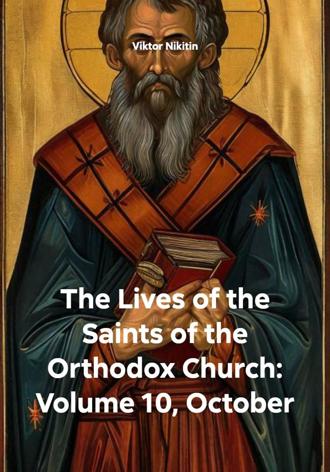
The Lives of the Saints of the Orthodox Church: Volume 10, October
Righteous Macarios of Chios (18th century):
Saint Macarios of Chios is venerated as a righteous and ascetic figure who lived during the 18th century on the island of Chios. Known for his humility, prayer, and miracles, he labored diligently for the spiritual welfare of his flock. Macarios’s life was marked by charity, healing, and a deep sense of pastoral care. His sanctity became widely recognized, and many sought his prayers and counsel. Through his example, the faithful learned the virtues of patience, steadfastness, and love, embodying the Christian ideal of holiness in everyday life.
Saint Cindeus of Cyprus, Monk (Date uncertain):
Saint Cindeus of Cyprus is remembered as a devoted monk whose ascetic life on the island of Cyprus contributed to the strengthening of monasticism in the region. Although little is known about his exact dates, tradition honors him for his commitment to prayer, fasting, and spiritual struggle. His example encouraged the growth of monastic communities in Cyprus, fostering a spirit of repentance and holiness. Saint Cindeus is commemorated for his quiet yet profound witness to the transformative power of the monastic calling.
* * *
Lives of the Saints Celebrated on October 7
Martyrs Sergius and Bacchus of Syria (3rd century):
Saints Sergius and Bacchus were Roman soldiers stationed in Syria under Emperor Galerius and secretly devoted Christians. Their story is one of extraordinary courage and mutual love in the face of brutal persecution. When their faith was discovered, they were subjected to imprisonment, torture, and humiliation. Bacchus endured severe beatings and died from his wounds, but Sergius was sentenced to beheading. Throughout their trials, they encouraged one another, embodying brotherly love and solidarity in Christ. Their martyrdom became a profound example of the strength faith can give in adversity, especially highlighting the spiritual bond between friends united in Christ. Venerated widely in both Eastern and Western traditions, they are honored as patrons of soldiers and faithful Christians facing persecution.
Martyrs Julian the Presbyter and Caesarius the Deacon of Terracina (3rd century):
Julian and Caesarius were leaders in the early Christian community of Terracina, Italy, during a time of fierce imperial hostility toward Christianity. Julian, as presbyter, and Caesarius, as deacon, carried heavy pastoral responsibilities, caring for the spiritual needs of the faithful. Their arrest came after they refused to participate in pagan rituals, and they endured grueling trials marked by threats, imprisonment, and torture. Despite immense suffering, they never wavered in their witness to Christ, strengthening the resolve of believers around them. Their steadfast faith ultimately led to their martyrdom, celebrated as a testament to pastoral courage and divine grace. Their lives remind the Church of the sacrifices made by early Christian shepherds for the faith.
Martyr Polychronius the Presbyter (Date uncertain):
Saint Polychronius served as a presbyter in a time when Christianity was often met with hostility and persecution. His pastoral care was marked by unwavering commitment to his flock and courage in the face of threats. When arrested for his faith, Polychronius endured brutal interrogation and physical torment, remaining resolute in confessing Christ as Lord. His martyrdom exemplifies the power of pastoral love and the strength derived from divine grace to confront suffering without fear. His memory continues to inspire clergy and laity alike to remain faithful and courageous in times of trial.
Virgin-Martyr Pelagia of Tarsus (3rd century):
Saint Pelagia was a young Christian woman of remarkable beauty and virtue from Tarsus. Her refusal to marry a pagan governor who demanded her hand led to her arrest and condemnation. She chose to dedicate herself entirely to Christ, rejecting worldly honors and comforts. Subjected to harsh tortures, including being burned alive, Pelagia’s unwavering faith shone as a beacon of purity and courage. Her martyrdom is celebrated as a profound witness to the sanctity of virginity and the strength found in total surrender to God. Pelagia’s life inspires countless believers, especially women, to pursue holiness and steadfastness amid persecution.
Saint Sergius, Abbot of Nurma (Vologda), Disciple of St. Sergius of Radonezh (14th century):
Saint Sergius of Nurma was a devoted disciple of St. Sergius of Radonezh, inheriting his spiritual zeal and commitment to monastic renewal. After his mentor’s death, Sergius continued to promote monastic ideals of humility, obedience, and ceaseless prayer in the harsh northern climate of Vologda. As abbot, he faced many hardships while establishing a monastic community that became a spiritual beacon in the region. His holiness attracted many disciples, and he was known for performing miracles, healing the sick, and offering wise counsel. His life exemplifies the fruit of discipleship, demonstrating how the legacy of a great spiritual father can inspire renewal across generations and geographical boundaries.
Saint Sergius the Obedient of the Kiev Caves (13th century):
Living in the famous Kiev Pechersk Lavra, Saint Sergius was known for his extraordinary obedience and humility, two foundational monastic virtues. His entire life was given to prayer, fasting, and submission to the will of God and his spiritual superiors. Though living a hidden life, his holiness was evident to those around him, and his presence brought peace to the monastic community. Sergius’s obedience was not mere external compliance but a deep inner submission that transformed his heart and sanctified his soul. His life stands as a model for monastics and all Christians who seek true freedom through surrender to God’s will.
Martyrs Eusebius and Felix of Terracina (3rd century):
Saints Eusebius and Felix were courageous Christians who suffered martyrdom in Terracina, Italy, during the height of Roman persecution. Their faith was tested through harsh imprisonment and cruel tortures, yet their spirit remained unbroken. As they faced death, they witnessed with boldness and compassion, encouraging fellow believers to stand firm. Their martyrdom strengthened the Christian community’s resolve and became a source of inspiration for generations. The memory of their sacrifice continues to serve as a call to faithfulness and love even unto death.
New-Martyr Priest Valentine (Sventitsky) (20th century):
Father Valentine served the Orthodox Church during the turbulent years of Soviet repression, when the Church was under relentless attack. Despite constant danger, he ministered fearlessly, administering the sacraments and providing spiritual care to his flock. Arrested and imprisoned for his faith, Valentine endured harsh conditions with unwavering devotion. Ultimately martyred for his refusal to renounce Christ, he became a beacon of hope and courage for persecuted Christians. His life exemplifies the resilience of faith and the power of priestly witness in the darkest times of history.
Saint Leontius the Governor (Date uncertain):
Saint Leontius was a just and compassionate governor known for his deep Christian faith and commitment to serving both God and his people. His governance was marked by mercy, charity, and efforts to protect Christians from persecution. Leontius’s leadership blended civic responsibility with spiritual devotion, embodying the Christian ideal of servant leadership. His life inspired many to seek holiness within their own societal roles and to promote justice tempered by love. Though details of his life are scarce, his legacy endures as an example of faith-driven governance.
Venerable Joseph the Elder of Georgia (18th century):
Venerable Joseph was a revered spiritual elder and ascetic in Georgia, living during a time of religious and political upheaval. Renowned for his prayerfulness, wisdom, and humility, he became a sought-after spiritual guide for monks and laypeople alike. Joseph’s counsel was marked by profound insight into the human heart and a deep trust in God’s providence. Despite external challenges, he maintained a peaceful spirit, inspiring renewal and devotion throughout the Georgian Church. His life demonstrates how steadfast prayer and humility can anchor the faithful amid worldly trials.
Saint John the Hermit of Crete (Date uncertain):
Saint John withdrew from the world to live as a hermit in Crete, embracing solitude and silence as means to draw closer to God. His life was one of extreme asceticism, marked by constant prayer, fasting, and vigilance over his thoughts. Though hidden from the world, John’s sanctity became known through miracles and the spiritual guidance he provided to those who sought him. His life exemplifies the eremitic ideal: retreating from worldly distractions to attain spiritual illumination. John’s example encourages believers to find moments of quietude and prayer amidst the noise of daily life.
Martyr Osyth, Abbess of Chich (7th century):
Saint Osyth was an English abbess known for her holiness, leadership, and charitable works. As abbess, she led her community with wisdom and a deep love for Christ. When pagan invaders attacked, she was captured and offered freedom in exchange for renouncing her faith. Osyth refused, choosing instead to embrace martyrdom. Her death inspired many to remain faithful despite persecution. Venerated as a powerful intercessor and protector, her legacy is one of courage, faithfulness, and holy leadership.
The 99 Fathers of Crete (Date uncertain):
The 99 Fathers of Crete were a brotherhood of ascetic monks committed to lives of prayer, fasting, and monastic discipline. Their community was a bastion of spiritual fervor, supporting one another in the pursuit of holiness. Though their individual names have largely been lost, their collective witness endures as a testament to the strength of communal monastic life. Their dedication encouraged the spread of Christian virtues throughout Crete and inspired future generations of monastics to embrace the rigors of spiritual struggle for the sake of Christ.
Opening of the Relics of Saint Martinian, Abbot of Byelozersk (Date of repose: 1483):
Saint Martinian was the founder and first abbot of the Byelozersk Monastery, known for his ascetic life and miraculous deeds. The opening of his relics revealed incorruption, a sign of his sanctity. His spiritual leadership helped establish monasticism in northern Russia, shaping the religious landscape of the region. Martinian was renowned for his humility, compassion, and healing prayers. Pilgrims continue to visit his relics, seeking physical and spiritual healing. His legacy is a testament to the transformative power of holiness and prayer.
Opening of the Relics of Bishop Jonah of Manchuria (Date of repose: 1925):
Bishop Jonah was a missionary bishop whose tireless efforts brought the Orthodox faith to the faithful in Manchuria. Facing harsh climates and political turmoil, he remained dedicated to pastoral care, building churches, and establishing schools. The opening of his relics confirmed the grace and holiness with which he served the Church. Bishop Jonah’s life is a modern example of missionary zeal and pastoral love, encouraging believers to carry the Gospel to the ends of the earth despite hardships.
Конец ознакомительного фрагмента.
Текст предоставлен ООО «Литрес».
Прочитайте эту книгу целиком, купив полную легальную версию на Литрес.
Безопасно оплатить книгу можно банковской картой Visa, MasterCard, Maestro, со счета мобильного телефона, с платежного терминала, в салоне МТС или Связной, через PayPal, WebMoney, Яндекс.Деньги, QIWI Кошелек, бонусными картами или другим удобным Вам способом.
Приобретайте полный текст книги у нашего партнера: